If you’re running an MCP server python implementation right now, the next ninety days matter more than you think.
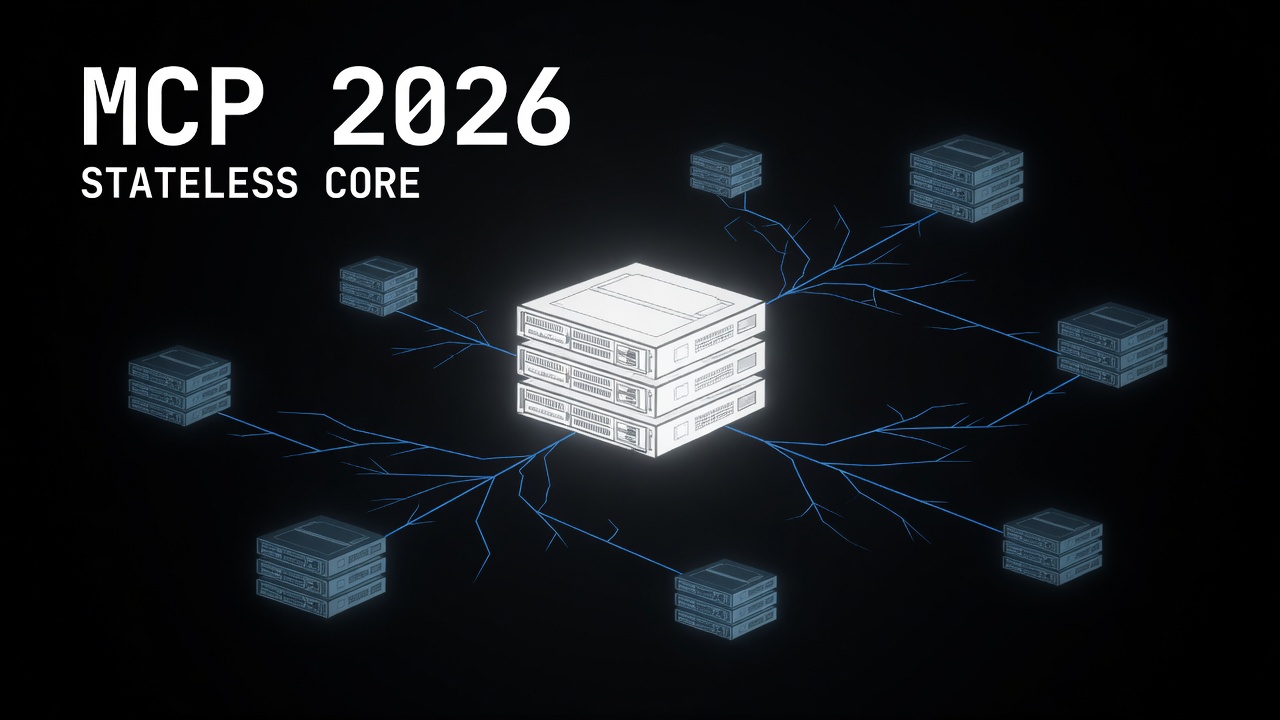
The Model Context Protocol’s next specification release candidate — dated 2026-07-28 — makes the protocol stateless at its core. SDK downloads across the ecosystem reached roughly 110 million per month as of this spring, up from approximately 2 million at launch. That scale means this is no longer a spec-reading exercise. It’s a migration deadline.
This post breaks down exactly what’s changing, gives you a production-ready MCP server python implementation built around the new stateless model, and flags the one architectural assumption that breaks the most existing servers.
Why Every MCP Server Python Build Needs to Change
MCP was originally designed for a simple case: an AI assistant connecting to a tool running on your laptop. That model assumed session continuity — the server could remember a repository path, a browser session, or a task state between calls.
That assumption doesn’t survive contact with production scale. The moment requests move across server instances — load balancers, autoscaling groups, multi-region deployments — any MCP server python build that silently remembers state between tool calls will fail in ways that are brutal to debug.
The fix in the 2026-07-28 release candidate is architectural: explicit handle-based state passing. If your server needs to remember something, that something now needs a handle the client can see, log, and pass back safely — not an implicit assumption baked into the session.
For the orchestration layer this connects to, see the Sub-Agent Orchestration in Python post in this series.
Production Code: A Stateless MCP Server Python Build
The implementation below follows the explicit-handle pattern from the start, so it doesn’t need retrofitting when the final spec lands.
Step 1 — Install dependencies
pip install mcp python-dotenvStep 2 — Stateless tool definitions
import os
from mcp.server.fastmcp import FastMCP
from dotenv import load_dotenv

load_dotenv()

mcp = FastMCP("agentic-protocol-data-server")

# In-memory store for this example only.
# Production deployments should back this with Redis or a database
# keyed by the explicit handle — never by an implicit session ID.
TASK_STORE: dict[str, dict] = {}


@mcp.tool()
def start_research_task(topic: str, depth: int = 2) -> dict:
    """
    Starts a research task and returns an explicit handle.
    The client is responsible for passing this handle back —
    the server holds no implicit session state about who called this.
    """
    handle = f"task_{os.urandom(4).hex()}"
    TASK_STORE[handle] = {
        "topic": topic,
        "depth": depth,
        "status": "running",
        "results": []
    }
    print(f"[TASK STARTED] {handle} -> topic={topic}, depth={depth}")
    return {"handle": handle, "status": "running"}


@mcp.tool()
def get_task_status(handle: str) -> dict:
    """
    Retrieves task status using the explicit handle.
    No session lookup. No implicit state. The handle is the
    entire contract between client and server.
    """
    task = TASK_STORE.get(handle)
    if task is None:
        return {"error": f"No task found for handle: {handle}"}
    return {"handle": handle, **task}


@mcp.tool()
def complete_research_task(handle: str, findings: list[str]) -> dict:
    """
    Marks a task complete and stores findings against the handle.
    Stateless by design — this call works identically regardless
    of which server instance processes it.
    """
    task = TASK_STORE.get(handle)
    if task is None:
        return {"error": f"No task found for handle: {handle}"}

    task["status"] = "complete"
    task["results"] = findings
    print(f"[TASK COMPLETE] {handle} -> {len(findings)} findings stored")
    return {"handle": handle, "status": "complete", "result_count": len(findings)}


if __name__ == "__main__":
    mcp.run(transport="stdio")
Notice what’s absent from this MCP server python build: there is no session object, no cookie, no server-side memory of “which client” is calling. Every piece of continuity flows through the handle the client receives and passes back explicitly. That’s the entire migration in one pattern.
The Context Bloat Problem Most Builders Miss
There’s a second lesson from the MCP ecosystem worth building into any MCP server python deployment from day one: tool definitions are expensive if you dump all of them into context at once.
Before Claude Code implemented tool search, MCP tool definitions reportedly consumed 22% of a 200k-token context window before a single task began. After tool search, that overhead dropped to essentially zero — because tools get discovered and loaded on demand instead of being front-loaded into every request.
Continue in This Series
- MCP Remote Code Execution — the AutoJack vulnerability every MCP server builder must patch
- Lethal Trifecta — why MCP servers are the most exposed session type
- Coding Agent Supply Chain Attack — when the MCP tool itself becomes the target
- AI Agent Gateway — the infrastructure layer that governs MCP tool calls at scale
- Claude Code Agent Teams — how MCP-native teams differ from manual orchestration