The napping protocol is the most evidence-backed cognitive reset in this Wellness series that most builders aren’t using — and the most common objection to it (“I don’t have time to nap”) is precisely the objection that the research dismantles most thoroughly.
NASA’s landmark study found that a 26-minute nap produced a 34% improvement in performance and a 100% improvement in alertness in pilots conducting long-duration flights. A Harvard study found that naps improve logical reasoning and reaction times by more than 30%. Research published in the journal Sleep found that a 20-minute nap enhanced alertness and performance in sleep-deprived participants. The pattern across all of this research is consistent: 10 to 30 minutes of daytime sleep, timed to the natural circadian dip between 1 and 3 PM, produces cognitive performance gains that caffeine alone cannot replicate — and does so without the tolerance, dependency, or late-afternoon crash that additional caffeine creates.
This post gives you the napping protocol optimized for builders: three options ranked by situation, the coffee nap technique that makes the 20-minute version significantly more effective, and the integration with every other protocol in this series that makes napping a compounding rather than isolated intervention.
Why Builders Specifically Need the Napping Protocol
The AI Productivity Paradox post established that builders test 19% slower on complex tasks despite feeling faster with AI assistance. The Attention Residue post covered how switching between tasks leaves partial cognitive activation that compounds across the workday. Both of these problems worsen as the day progresses — the prefrontal cortex that handles architectural reasoning, complex debugging, and multi-constraint system design runs on directed attention capacity that depletes with use and doesn’t recover through passive distraction.
The 1 to 3 PM circadian dip is not a caffeine problem. It’s a hardwired neurological event — a programmed reduction in alertness that appears across human populations regardless of sleep quality the night before. Fighting it with caffeine reduces the dip but creates a rebound effect later. Working through it without intervention produces genuinely suboptimal work on the highest-complexity tasks. The napping protocol works with the circadian dip by using it: the body’s natural readiness to enter Stage 1 or Stage 2 sleep during the circadian trough makes the 1 to 3 PM window the most efficient napping window of the day.
The critical constraint: naps longer than 30 minutes carry meaningful risk of sleep inertia — the grogginess that comes from waking from Stage 3 or Stage 4 deep sleep. Research shows that naps under 30 minutes improve performance for 42.7% of workers without the inertia cost. Naps over 30 minutes are effective for memory consolidation but require a longer recovery window before peak performance resumes. The napping protocol below is built around the under-30-minute constraint that makes napping a net positive rather than a net neutral for the afternoon work block.
The Three-Tier Napping Protocol: Ranked by Situation
Tier 1 — The Coffee Nap (20 minutes, highest efficiency)
Best for: Standard afternoon reset when you need to maintain full afternoon output.
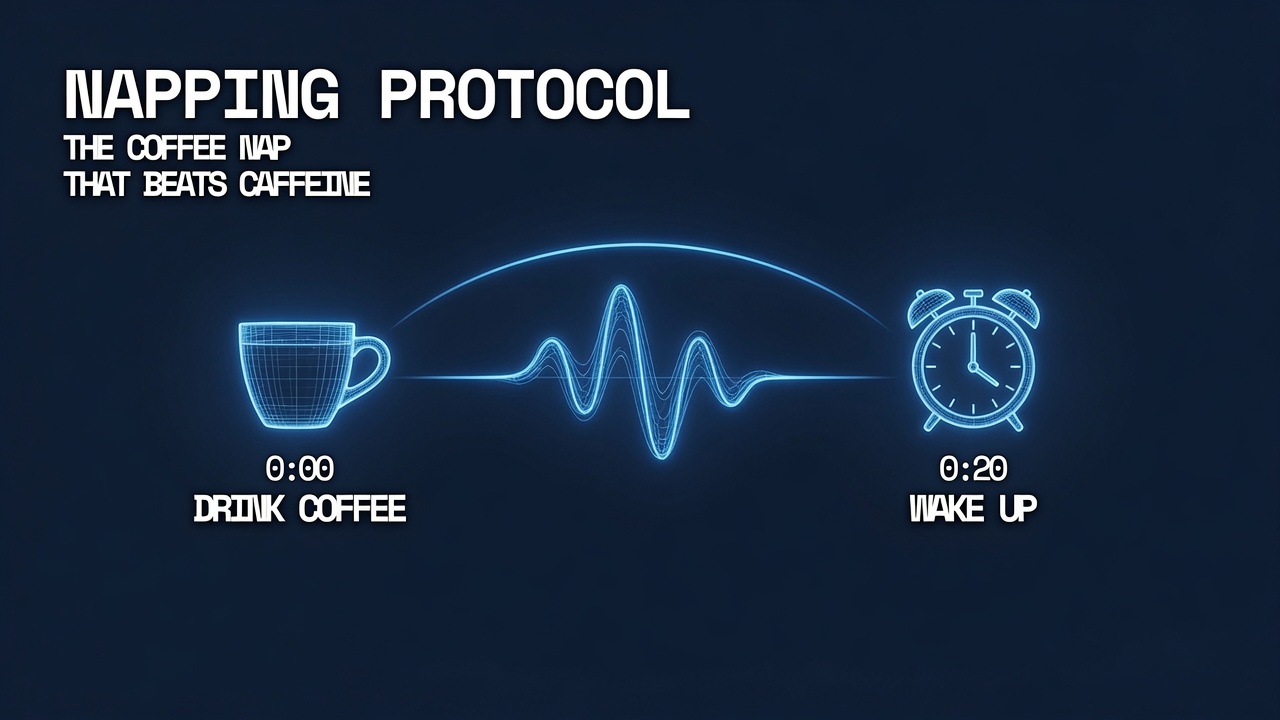
The coffee nap — also called the nappuccino — is the most counterintuitive and most effective variant in the napping protocol. The mechanism is specific: caffeine takes 20 to 30 minutes to be absorbed through the digestive system and reach peak plasma concentration. A nap taken immediately after drinking coffee allows Stage 1 to early Stage 2 sleep to clear adenosine from neural receptors during the same window that caffeine is transiting through the gut. When you wake at 20 minutes, two things happen simultaneously: the adenosine that would have caused post-nap grogginess has been cleared by the sleep itself, and the caffeine arrives at exactly the moment the nap ends — with no adenosine to compete against. The result is alertness that neither the nap alone nor the caffeine alone would produce.
The protocol:
- Set a timer for 20 minutes — not 25, not 30. The specificity matters for avoiding Stage 3 sleep entry.
- Drink 200mg caffeine (one standard cup of filter coffee — the volume and warmth support the sleepiness onset). Drink immediately before lying down, not 10 minutes before.
- Lie down in a dark, quiet environment. Eye mask and earplugs if available. If you can’t fall asleep, remain still with eyes closed — even non-sleep rest in Stage 1 produces 50 to 70% of the alertness benefit.
- When the timer sounds, stand up immediately. The temptation to extend is the primary failure mode — resist it completely.
- Allow 5 minutes for the caffeine to fully take effect before returning to complex cognitive work.
The coffee nap connection to the Nootropic Protocol: the Tier 1 stack (L-theanine + caffeine) was positioned for the morning window. For builders running the coffee nap, the afternoon caffeine comes from the nap’s coffee dose rather than a second standalone caffeine dose. This naturally enforces the noon to 1 PM caffeine cutoff the Sleepmaxxing Protocol requires — the coffee nap at 1 PM is the last caffeine of the day, and its 20-minute duration keeps it inside the window that doesn’t disrupt evening sleep architecture.
Tier 2 — The Power Nap (10–15 minutes, minimum viable reset)
Best for: Days when a 20-minute window isn’t available — between meetings, during a commute, before a critical afternoon session.
A 10-minute nap has been shown to significantly improve memory performance compared to controls who did not nap, in research published in Sleep. The performance gain is smaller than the 20-minute version but arrives without any risk of sleep inertia — you don’t reach Stage 2 sleep in 10 minutes, which means you wake from Stage 1 without grogginess. The minimum viable napping protocol is 10 minutes of eyes-closed rest in a horizontal position. The horizontal element matters: lying flat reduces heart rate, core temperature, and sympathetic nervous system activity faster than seated rest, which is what enables Stage 1 entry within 5 minutes even for builders who believe they “can’t nap.”
Tier 3 — The Full Cycle Nap (90 minutes, weekend or high-recovery need)
Best for: Recovery from severe sleep deficit, creative problem-solving that benefits from REM, or the Weekly Reset Protocol‘s Sunday window if the night before was short.
The 90-minute nap completes a full sleep cycle including REM, which produces the memory consolidation, emotional processing, and creative insight benefits that only REM provides. The cost: some sleep inertia on waking (15 to 20 minutes of suboptimal function), significant disruption to nighttime sleep if taken after 3 PM, and a time commitment that’s rarely available during a standard workday. The full cycle nap belongs in the weekend recovery context, not the daily protocol — it’s the option for Sundays before a high-demand week, not the tool for Tuesday afternoon cognitive reset.
Integrating the Napping Protocol Into the Existing Stack
The napping protocol slots into the daily schedule between the eating window transition and the second deep work block:
- 12:00 PM: First meal (eating window opens per IF Protocol). Outdoor micro-restoration walk if possible.
- 1:00 PM: Coffee nap begins. Drink 200mg caffeine, lie down, set 20-minute timer.
- 1:25 PM: Wake, allow 5 minutes for caffeine to peak. Physiological sigh from the Breathwork Protocol to complete the transition.
- 1:30 PM: Second deep work block begins. Caffeine + Stage 2 sleep recovery = the highest-performance afternoon window achievable without pharmaceutical intervention.
The Cold Plunge Protocol post positioned mid-afternoon cold exposure as an alternative cognitive reset. On days when a nap isn’t possible, 2 to 3 minutes of cold at 1 PM produces a different but partially overlapping benefit — the dopamine surge provides alertness reset without the sleep-based adenosine clearing. The two tools are complements, not substitutes: use the coffee nap for maximum afternoon cognitive performance on days when the schedule allows, and cold plunge for rapid reset on days when it doesn’t.
The Sleepmaxxing Protocol constraint applies specifically: no naps after 3 PM, and no naps longer than 25 to 30 minutes on a standard day. Violating either of these constraints shifts the nap from cognitive enhancement to nighttime sleep disruption — which would degrade tomorrow morning’s cortisol awakening response and undermine the Morning Routine Protocol’s entire performance foundation.
For the full power nap research review, see the Muse neuroscience team’s power napping analysis.
The Builder’s Takeaway
The napping protocol is the one intervention in this Wellness series that most builders haven’t tried and most research says they should. The 26-minute NASA result and the Harvard 30% performance improvement aren’t outlier findings — they represent a consistent pattern across decades of sleep research that the cultural narrative against daytime sleep has obscured in productivity content. The coffee nap at 1 PM — 200mg caffeine, 20-minute timer, stand up immediately — produces alertness that stacks the adenosine-clearing benefit of Stage 1-2 sleep with the caffeine arrival that occurs at wake-up, without the afternoon crash that a standalone caffeine dose generates. It takes 25 minutes including transition. It costs nothing. The only barrier is the social conditioning that associates daytime sleep with laziness — which the NASA data is sufficiently authoritative to override for any builder who takes the performance evidence seriously.
Continue in This Series
- Sleepmaxxing Protocol — the nighttime architecture that the napping protocol supplements: naps before 3 PM, under 30 min, protect overnight slow-wave depth
- Nootropic Protocol — the coffee nap uses Tier 1 caffeine differently: afternoon dose via nap instead of standalone, enforcing the noon cutoff
- Cold Plunge Protocol — the alternative mid-afternoon reset: cold plunge on days when a nap isn’t available; both target the 1-3 PM circadian dip
- Intermittent Fasting Protocol — the eating window timeline: first meal at noon, coffee nap at 1 PM, second deep work block at 1:30 PM
- Breathwork Protocol — the physiological sigh at T+20 post-nap: the fastest tool for completing the sleep-to-work transition
This post is part of The Agentic Protocol’s Wellness series — the biological hardware layer beneath every autonomous system you build. See also: Sleepmaxxing Protocol.