The GPT-5.6 Sol benchmark result that landed on June 26–27 is the most significant shift in the AI coding agent leaderboard since this series began — and it changes at least one architectural decision for every builder who read the earlier posts in this series.
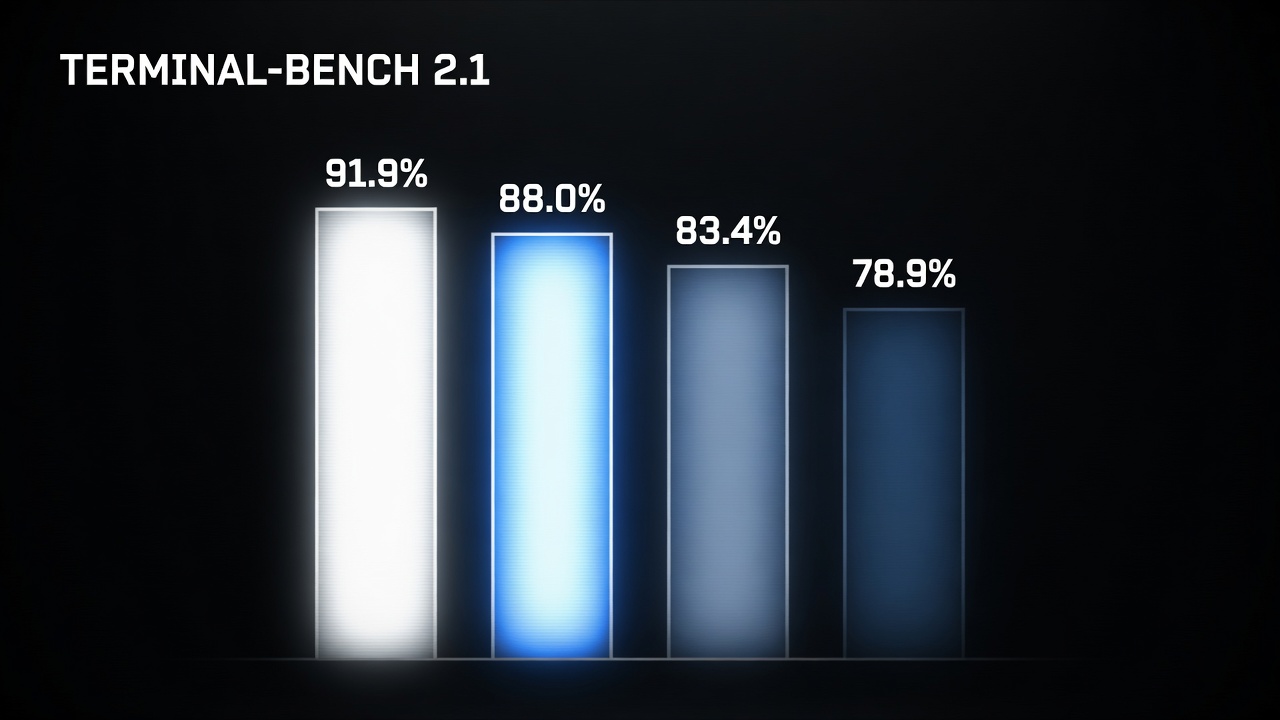
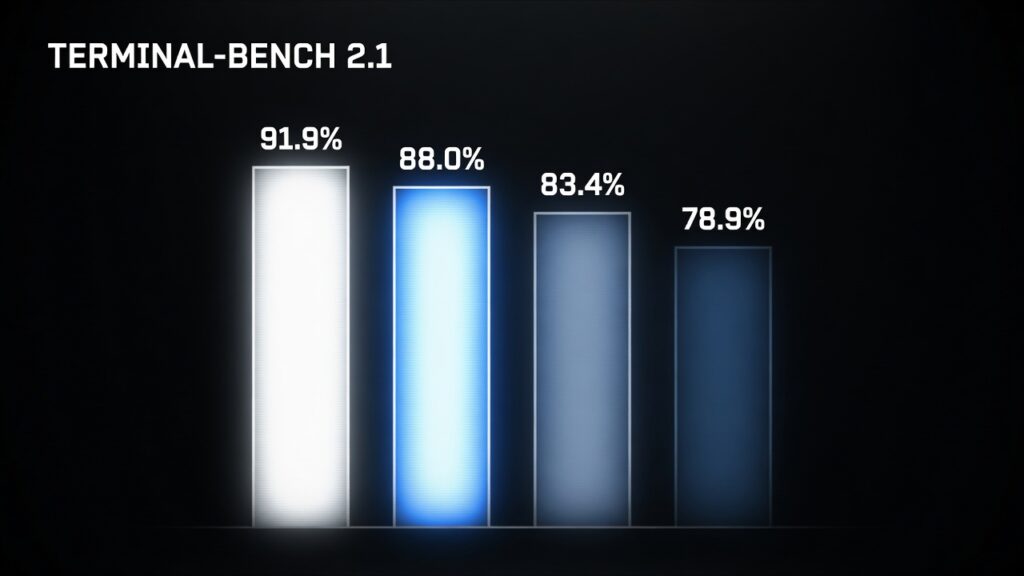
On Terminal-Bench 2.1, the current standard for agentic command-line engineering, GPT-5.6 Sol Ultra scored 91.9% — the new state of the art, ahead of Claude Mythos 5 at 88.0%, Claude Fable 5 at 83.4% (still suspended for most users per export-control restrictions), and Claude Opus 4.8 at 78.9%. Even GPT-5.6 Luna, the cheapest tier, scored 82.5% — above Opus 4.8. On Agent’s Last Exam, Sol became the first model to cross 50% task completion at 50.9%.
There’s a significant catch: none of this is publicly accessible yet. Access is currently restricted to approximately 20 vetted partner organizations at the US government’s request, with broad availability for the API and ChatGPT planned in the coming weeks. This post breaks down what the GPT-5.6 Sol benchmark result actually means for builders — and what it doesn’t mean.
What the GPT-5.6 Sol Benchmark Result Actually Proves
The 91.9% Terminal-Bench score is real and meaningful — Terminal-Bench 2.1 is a rigorous, real-world engineering task benchmark, not a curated demo. But the GPT-5.6 Sol benchmark result also needs to be read in context: Sol Ultra is a compute-intensive mode, not a standard API tier. The benchmark tests what the model can do when it has maximum compute allocation, which is not the same as what you’ll experience when it’s available in production at general-access pricing.
More importantly, this is the second benchmark leadership change in a month. The Claude Fable 5 Suspended post covered how the prior benchmark leader disappeared from general availability within weeks of its top score. The GPT-5.6 Sol benchmark shows a new leader — still government-gated — with Claude Mythos 5 itself only partially restored under export-control restrictions. Benchmark leadership and production availability are now two separate questions, and treating them as the same one is exactly the mistake that breaks pipelines.
How the GPT-5.6 Sol Benchmark Changes Your Fallback Architecture
The Model Fallback Routing post in this series established the principle: never hardcode a single model in production, and never put a model with restricted-availability exposure in your primary path. The GPT-5.6 Sol benchmark result requires one update to that framework — the cross-provider fallback chain covered in the Claude API Outage post needs a new evaluation layer: not just “which model is cheapest right now” but “which model is actually available to my user base today.”
# .env — updated after GPT-5.6 Sol benchmark results (June 27, 2026)

# WRONG: chasing benchmark top score in your primary path
# GPT-5.6 Sol Ultra is not yet on public API — restricted to ~20 orgs
# Claude Fable 5 still suspended for most user geographies
# MODEL_CHAIN=gpt-5.6-sol-ultra,claude-fable-5,claude-opus-4-8

# RIGHT: GA + broadly available models first.
# Restricted/government-gated models ONLY for internal experimentation.
# Updated to reflect July 2026 availability status:
MODEL_CHAIN=claude-opus-4-8,claude-sonnet-4-6,gpt-5.5

# GPT-5.6 Sol Ultra is the benchmark leader right now —
# add it here ONLY once broad API access is confirmed.
# FUTURE_PRIMARY=gpt-5.6-sol-ultra  # watch for July public availability
The comment at the bottom of that config is the operationally important part. The GPT-5.6 Sol benchmark result gives you a clear target for when general access ships — if the production performance holds at anything close to the benchmark number, Sol Ultra becomes worth serious evaluation as a primary model for complex agentic engineering tasks. But “worth evaluating” and “safe to put in production today” are different stages, and the evaluation can happen in a staging environment while your GA chain keeps running.
The Governance Pattern Behind Government-Gated Frontier Models
The June 26–27 dual launch — GPT-5.6 as a government-coordinated preview alongside the partial Mythos 5 restoration via the Commerce Department letter — establishes what one industry analysis called a new governance pattern for frontier AI releases in the United States: benchmark-leading models are now routinely government-gated before general release, with access contingent on vetting rather than simply being available to anyone with an API key.
Combined with the export-control pattern from the Claude Fable 5 Suspended post, this means the model availability risk that was treated as an edge case six months ago is now structurally embedded in how frontier models release. Builders who design their primary chains around generally-available, export-cleared models aren’t being conservative — they’re making the only production-reliable choice in the current regulatory environment.
The Builder’s Checklist for July
- Don’t migrate primary chains to GPT-5.6 Sol or Terra yet. You almost certainly don’t have access, and the general availability timeline is “coming weeks” — not confirmed dates.
- Watch for the Sol public API launch, likely sometime in July. When it ships, test in staging before touching production chains — benchmark numbers and production API behavior under real load are different things.
- If you serve users outside the US, add geographic availability as an evaluation criterion. The Commerce Department’s Annex-A export structure means some frontier models are now US-only by policy, not just by pricing.
- Keep Claude Opus 4.8 as your production-safe primary for now — it’s the strongest broadly-available, GA, export-cleared model in the current window, even if the GPT-5.6 Sol benchmark has moved the top of the leaderboard.
For the full GPT-5.6 benchmark breakdown, see Build Fast with AI’s June 29 analysis.
The Builder’s Takeaway
The GPT-5.6 Sol benchmark result is the most exciting capability number of the year so far. It’s also, right now, irrelevant to your production fallback chain — because the model isn’t accessible to you. The builders who’ll benefit most from it are the ones who’ve already built the cross-provider fallback infrastructure to slot Sol in cleanly when it does ship, rather than scrambling to restructure a single-provider pipeline once the access window opens.
This post is part of The Agentic Protocol’s Work series — the connective infrastructure layer beneath every autonomous pipeline. See also: Model Fallback Routing.